Executive Summary
Protectors 2026 delivered a clear message. Life insurance distribution is not choosing between people and technology. The industry needs technology that makes people more effective.
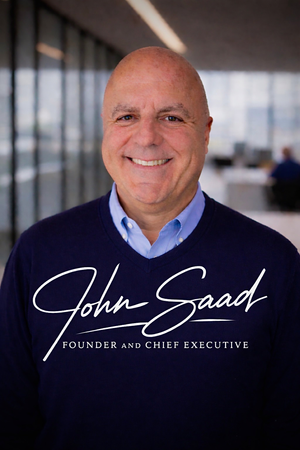
Big Ridge Consulting participated in the conference panel “What’s Next in Distribution? Views from Across the Insurance Ecosystem.” The discussion brought together John Saad, CEO and Founder of Big Ridge Consulting; Lisa Bickus, CEO of 1891 Financial Life; Sabby Ray, COO of Ray Consulting Services; Todd Shriber, CEO of Malibu Life Insurance; and Kristen Willey, Consultant with GTEC at Gallagher. Bobbie Shrivastav, CEO and Co-Founder of Solvrays, moderated the discussion.
The panel reflected a broader theme heard throughout the conference. Demand for protection and retirement products remains strong, but growth is being constrained by complicated products, slow underwriting, disconnected systems and outdated producer development models.
A separate discussion recorded at LIMRA Annual 2026 reinforced the same concern. Integrity Chief Distribution Officer Tom Dempsey described a buying process that can still take 20 to 40 days and challenged the industry to simplify the customer and advisor experience.
The technology failure that disrupted United States airspace shortly after Protectors offered a timely warning. Organizations can appear modern at the point of service while remaining dependent on aging infrastructure beneath the surface. Life insurers face the same risk.
The next competitive advantage will come from simplifying the producer experience, orchestrating legacy systems, developing new leaders and proving that technology improves measurable business outcomes.
Watch the full Protectors panel discussion
The Advisor Is Not Disappearing
Several Protectors speakers rejected the idea that digital tools will eliminate the insurance advisor.
Bill Shelow, CEO and President of LIBRA Insurance Partners, put it directly: “We’ll still need advisors and agents to sell our product.”
The opportunity is to expand where those advisors come from. Property and casualty firms, accounting practices, employee benefit organizations and wealth management firms already have trusted client relationships. They can become important sources of life insurance and annuity growth if carriers and distributors give them the right education, tools and support.
Jason Mickool, President of Florida Financial Advisors, explained why technology cannot fully replace the human role: “AI is a cold hand to hold when the market is down 20% or a loved one dies.”
Technology can organize information, accelerate applications and support recommendations. It cannot assume the emotional responsibility of helping a family make an important decision during a difficult moment.
The winning distribution model will combine digital efficiency with human judgment. The advisor becomes more valuable when technology removes administrative work and creates more time for guidance, education and relationship building.
Simplification Is Becoming a Growth Strategy
In a discussion recorded at LIMRA Annual 2026 and published by Zinnia, Integrity Chief Distribution Officer Tom Dempsey described the industry’s operating challenge in practical terms.
The life insurance experience varies by carrier, and applications can still take 20 to 40 days to complete. Inconsistent underwriting requirements, disconnected application processes and not in good order submissions create delays for clients and additional work for advisors.
Dempsey’s prescription was concise: “You have to simplify to multiply.”
His comments support a point heard throughout Protectors. Carriers and distributors frequently place new technology on top of workflows that were never redesigned. The result is another login, another dashboard and another source of information employees must reconcile manually.
Simplification starts by examining the complete journey from prospect identification through policy placement and ongoing service. Leaders should identify where information is entered more than once, where decisions wait in queues and where producers lose visibility into case status.
Carrie Freeburg of Thrivent captured the product challenge: “Products are getting more complex behind the scenes, but we can make them simpler on the front end.”
That requires product development, operations, marketing and distribution to work together. A technically strong product will not reach its potential if advisors cannot explain it or clients cannot understand it.
Investment Must Begin With People and Partnerships
During the Big Ridge panel, participants examined how a carrier should deploy new capital when its board expects measurable growth. Lisa Bickus emphasized that modernization begins with human capability.
“We need to hire very high experienced people in the industry today who have the knowledge and skill set,” Bickus said.
She also identified partnerships and process pain points as essential considerations. Her point was not that every carrier needs a larger workforce. Capital must be directed by people who understand the business, supported by partners who understand the strategy and focused on the operational constraints preventing scale.
For smaller and midsized carriers, that discipline is especially important. They rarely have the resources to replace every core platform or pursue every emerging technology. They must decide where specialized talent, external partnerships and targeted modernization will create the greatest return.
Experienced leadership prevents technology decisions from becoming isolated information technology projects. Distribution modernization should be governed by the outcomes it is expected to produce, including faster placement, better service, improved producer adoption and stronger persistency.
Technology Must Create a Better Experience
Technology received considerable attention at Protectors, but the strongest speakers focused on business results rather than novelty.
Panos Leledakis reminded attendees that “Consumers expect fast service.”
Jeffrey Williams described AI applications as “not tools, but teammates.” He also argued that “AI can turn your data into an advantage.”
Those statements point toward a practical standard. Technology should improve the experience for the client, producer or employee. If it does not reduce friction, improve a decision or increase productive capacity, it is unlikely to create durable value.
Todd Shriber raised a question that carriers should take seriously: “What is it besides that big pile of money that will enable you to build relationships with distributors?”
Capital strength matters, but it does not create preference by itself. Distributors also evaluate responsiveness, ease of doing business, underwriting consistency, service quality and leadership credibility.
Scott Karstens advised firms to “be different on purpose.” For carriers, purposeful differentiation may come from a clearly defined market, a superior producer experience or specialized expertise. Adding another product or index to an already crowded shelf is not a strategy.
The FAA Failure Offers a Warning for Insurance
On Friday, November 13, a technology failure led the Federal Aviation Administration to issue a nationwide ground stop. The disruption began during a routine equipment replacement and spread to 17 of the agency’s 22 air traffic control centers. The FAA said there was no indication of a cyberattack.
The event demonstrated how quickly a failure within aging infrastructure can affect an entire operating network.
Insurance carriers face a similar architectural problem. Many modern portals, digital applications and AI tools still depend on decades old policy administration systems, customized interfaces and manual workarounds.
A polished front end does not eliminate the risk underneath it.
This is why organizations such as Solvrays deserve greater attention. Rather than requiring carriers to replace every legacy platform at once, an orchestration layer can connect existing systems, coordinate workflows and create greater visibility across the operating environment. Solvrays and Sutherland have applied this approach to life and annuity processes where information and work must move across multiple carrier systems.
Orchestration is not a substitute for core modernization. It can provide a practical bridge while longer term transformation continues.
Distribution leaders should ask whether they can see an application’s complete path, identify single points of failure and move work when one system becomes unavailable. Resilience must become part of the producer experience.
Compensation and Leadership Must Change Together
Rona Guymon of Prosperity Life connected the industry’s talent challenge directly to its operating model: “Compensation must change and training must change to give them a life path to success.”
Traditional recruiting models often bring producers into the business with limited structure and expect immediate production. That approach does not align with the expectations of a younger workforce or the complexity of modern financial advice.
Compensation should reward more than submitted premium. It should reinforce clean applications, placed business, persistency, technology adoption, team development and appropriate client outcomes.
Leadership development must also broaden. Future distribution leaders need to understand data, workflow design, technology adoption and governance in addition to recruiting and sales management.
AI makes this leadership responsibility more urgent. As regulators increase their attention to model inventories, consumer impact, vendor oversight and human review, carriers will pass many of those expectations to distributors and technology partners.
The Big Ridge Perspective
Protectors 2026 reinforced an important reality. The future of distribution will still be built on trust, but trust now depends on systems that are often invisible to the client.
Carriers, IMOs, BGAs and agencies should simplify before they automate, orchestrate before they replace and develop people instead of depending solely on recruiting.
The winners will not be the firms with the largest collection of technology products. They will be the organizations that use technology to make advisors more capable, clients more confident and the entire distribution system more resilient.